
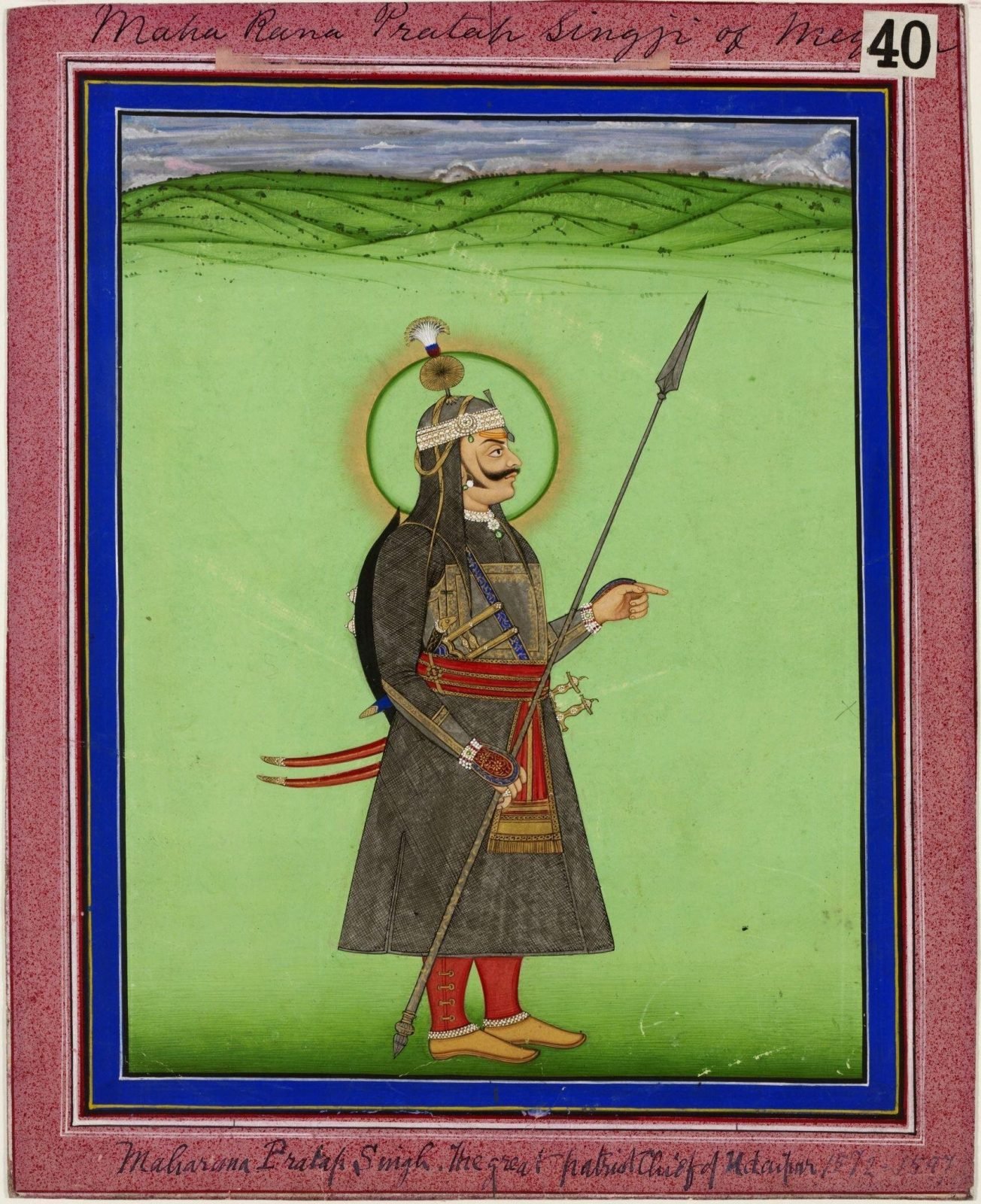
Maharana Pratap
The 13th Maharana of Mewar, remembered for refusing to submit to the Mughal empire and for the Battle of Haldighati (1576). A lasting symbol of self-respect and freedom.
Biography
Born at Kumbhalgarh to Maharana Udai Singh II and Jaiwanta Bai, Pratap succeeded to the throne of Mewar in 1572. Choosing hardship over submission, he continued the struggle from the forests and hills, supported by Bhil allies and loyal nobles. In his final years much of Mewar was recovered. He died at Chavand in 1597 and was succeeded by his son Amar Singh I.
Major achievements
- Never accepted Mughal suzerainty despite decades of pressure.
- Rebuilt Mewar’s resistance from the hills of the Aravalli and recovered most of his territory in later years.
- Established Chavand as his capital.
Battles
- Battle of Haldighati (18 June 1576) — fought against Mughal forces led by Raja Man Singh of Amber.
- Battle of Dewair (1582) — a decisive victory that turned the tide in Mewar.
Historical contribution
His resistance became a model of courage for later generations; his horse Chetak is part of folk memory across India.
Related history
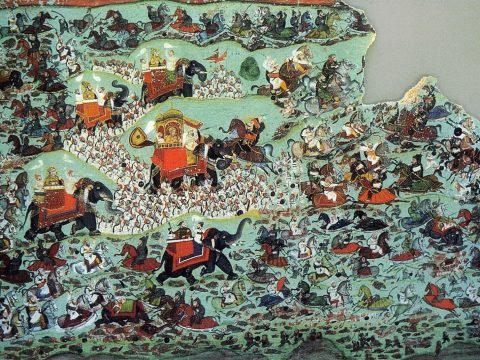 Battles
 The Battle of Haldighati (1576)
On 18 June 1576 Maharana Pratap’s army met Mughal forces led by Raja Man Singh in the narrow pass of Haldighati. Though Pratap had to withdraw, the battle became a lasting symbol of resistance.
G. H. Ojha, History of Udaipur (Rajputana ka Itihas)
Comments (0)
Log in to join the conversation.
At a glance
- Born9 May 1540, Kumbhalgarh, Mewar
- Died19 January 1597, Chavand, Mewar
- DynastyGuhil / Sisodia (Mewar)
- FatherMaharana Udai Singh II
- MotherMaharani Jaiwanta Bai
- ChildrenAmar Singh I (successor) and others
Timeline
Born at Kumbhalgarh
Becomes Maharana of Mewar
Crowned at Gogunda.
Battle of Haldighati
18 June 1576
Battle of Dewair
Turning point of the struggle.
Death at Chavand
Succeeded by Amar Singh I.

Be the first to share your thoughts.